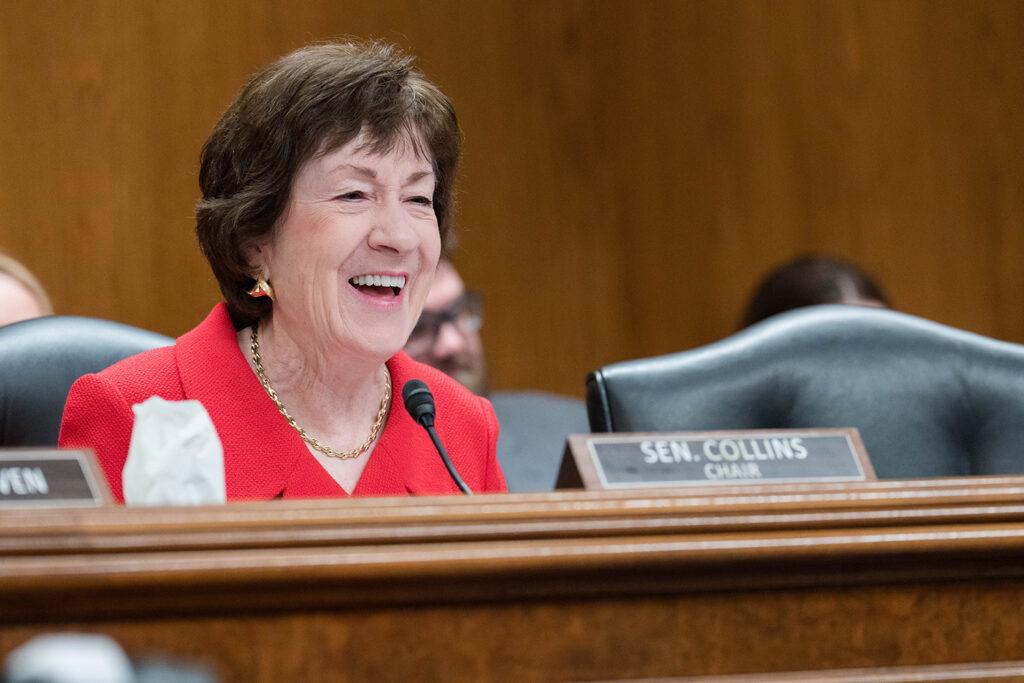
As part of ACA Connects President and CEO Grant Spellmeyer’s Capitol Connection series, Senator Susan Collins shared how she is a leading champion for expanding high-speed Internet access in rural America.
Senator Susan Collins (R-MA) is one of our nation’s most thoughtful and effective bipartisan leaders. The proof is in the real results she delivers to her constituents in Maine. As Chair of the powerful Senate Appropriations Committee, Senator Collins shapes federal investments and policies that help Maine communities grow and thrive—from broadband deployment, infrastructure, healthcare, economic development projects and beyond.
In this new edition of Capitol Connection, I’m pleased to share a timely and insightful conversation with Senator Collins on the future of broadband. Throughout our discussion, the Senator provides an on-the-ground update of how her leadership in major legislation and broadband funding programs has empowered America’s community-based providers to bridge the digital divide. Senator Collins also shares thoughtful reflections on America’s upcoming 250th anniversary and the responsibility policymakers have to invest wisely in the nation’s future.
I hope you enjoy this Capitol Connection conversation with Senator Collins. She really connects the dots of turning policy into action for those she serves!
Q: As the Chair of the Senate Appropriations Committee, you have jurisdiction over all federal government funding, arguably the most expansive jurisdiction of any U.S. Congressional Committee. This is a critically important role that directly supports Maine through funding ranging from broadband, to highways and bridges, to shipbuilding, to health services and beyond. As Chair, what are your top policy and funding priorities to support broadband deployments in rural America?
I’m honored to be the first Mainer in nearly a century to serve as the Chair of the Senate Appropriations Committee. This position allows me to directly advocate for my constituents in Maine by securing funding for improvements in the most important areas affecting the quality of life in our state—such as healthcare access, community infrastructure, child care availability, and beyond. An area of particular focus for me is broadband access, especially in our rural areas. Broadband is a vital part of our nation’s infrastructure and the backbone of our modern economy. Regardless of what community people live in, Americans expect reliable broadband service to connect to their healthcare providers, their educators, and their families.
On broadband policy, I’m working diligently to oversee the effectiveness of funding programs, like the bipartisan BEAD program. I was one of the 10 Senators who negotiated the bipartisan Infrastructure Investment and Jobs Act, and the lead Republican negotiator of the broadband working group with Senator Jeanne Shaheen of New Hampshire. IIJA provided $65 billion for broadband deployment – including $42.5 billion for the BEAD program – to unlock more economic potential in rural and underserved areas.

As Appropriations Chair, my top priority is to ensure federal funds are directed to where they are needed most and spent wisely to make the biggest difference for Americans. The recently enacted Fiscal Year 2026 appropriations bills included my language, ultimately approved with overwhelming bipartisan support, directing the Department of Commerce to prioritize unserved and then underserved areas, and to closely coordinate with FCC on basing decisions on accurate maps. Both of these matters are major challenges for rural Maine. In addition, earlier this year, Secretary Lutnick appeared before an Appropriations subcommittee to provide an update on efforts to implement the BEAD program – and then back again two months later. He has committed to work closely with my staff to ensure the program works as intended, particularly on the matter of “non-deployment” funds.

Q: ACA Connects members, including our members in Maine–TDS, Breezeline, Pioneer Broadband, and Tidewater Telecom–are at the forefront of connecting communities in rural America to reliable, high-speed internet. How can our members stay engaged and advocate for bipartisan policies that help them deploy more broadband infrastructure?
Our community-based broadband providers are among the best in the nation. From our rural farming towns to our coastal fishing communities, I’m grateful for their on-the-ground expertise and commitment to connect more people to reliable, affordable high-speed internet. They are a critical support for our small businesses, schools, hospitals, and so many aspects of everyday life.
I encourage your members to stay engaged and keep lines of communication open with me and their other representatives. I have long championed permitting reform, and I always appreciate hearing how the federal government can continue to lift permitting barriers and speed up broadband deployments. It is important that permitting reforms have both local stakeholder and bipartisan legislative support. In the last administration, based on feedback from various service providers, I shared how the administration was adding unnecessary roadblocks to the deployment of BEAD. Secretary Lutnick said that my letter helped guide the changes to the BEAD program that Commerce has since made.
Lasting reform depends on advocacy from you and other independent, community-based providers. By sharing the challenges you face directly with Members of Congress, we can work together to identify practical solutions and ensure your hard-earned investments aren’t hindered by unnecessary delays and permitting roadblocks.
Q: How are you celebrating America’s 250th birthday as Chair of the Senate Appropriations Committee and in your community?
As our nation prepares to mark 250 years of American independence, we have an opportunity to celebrate the ideals that have guided our country and to reflect on the responsibility we share to carry them forward. Ensuring America’s strength for the next 250 years will require the effective and responsible use of taxpayer dollars to meet the needs of our nation, support our communities, and uphold the trust of the American people.
As Chair of the Senate Appropriations Committee, I view that responsibility as central to my work. The appropriations process allows us to make investments that reflect the priorities of the people we represent, from supporting our national defense and strengthening our infrastructure to expanding access to health care, improving child care, and helping rural communities remain strong and connected.
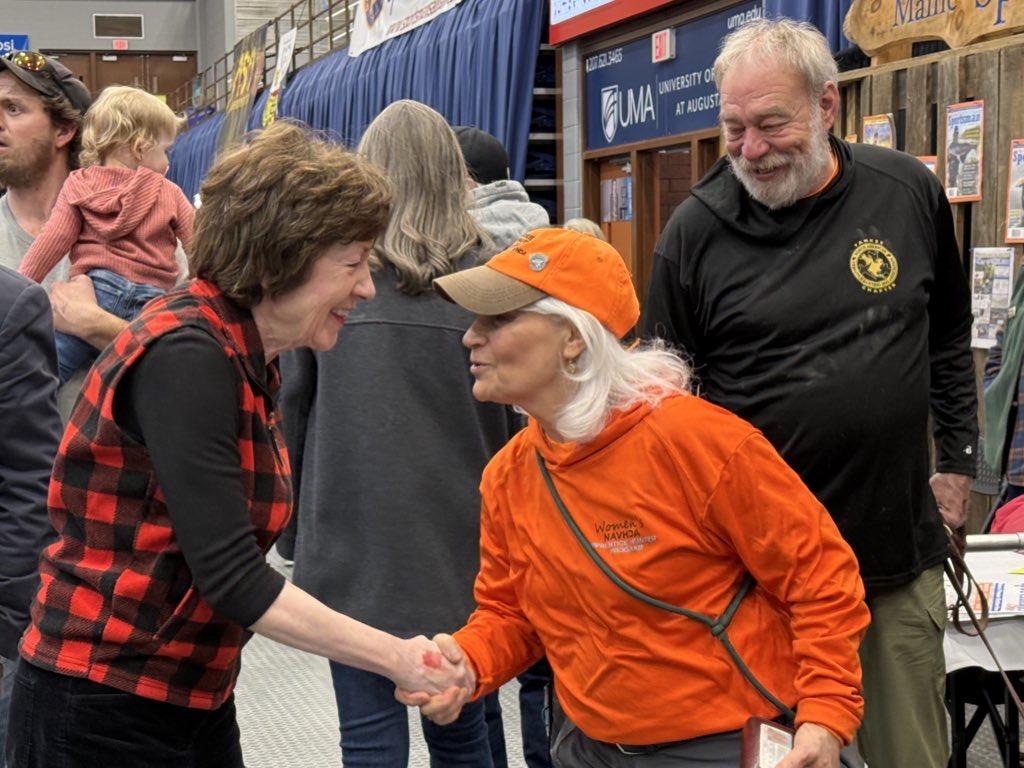
In Maine, I look forward to joining communities as they mark this historic anniversary in ways that honor our nation’s founding ideals and the generations of Americans who have defended and strengthened them. I am also proud to be a member of the Congressional America250 Caucus, which includes more than 400 Members of Congress and is the largest bicameral, bipartisan caucus in history. The 250th anniversary is an opportunity not only to look back with gratitude, but also to renew our commitment to building a stronger future for Maine and for our country.
Q: We are approaching the five-year anniversary of the Infrastructure Investment and Jobs Act (IIJA). You co-authored the broadband section of the IIJA with Senator Jeanne Shaheen (D-NH) and worked closely with the then-Secretary of Commerce to negotiate the provisions. Can you describe how these historic investments, including through the BEAD program, will impact underserved and unserved areas of Maine?
From spurring job creation to supporting telemedicine and education, reliable Internet service unlocks nearly endless opportunities. I co-authored the broadband section of the Infrastructure Investment and Jobs Act (IIJA) with my friend and colleague, Senator Jeanne Shaheen of New Hampshire, to help close the digital divide between rural and urban communities. I am pleased that this once-in-a-generation funding is helping Maine make historic investments to extend high-speed Internet service so that thousands of additional Mainers can stay connected to their loved ones, co-workers, schools, small businesses, and medical providers.
Maine will receive $272 million in broadband funding through the IIJA’s BEAD Program. A November announcement by the Commerce Department shared that $48.4 million of that funding would be paired with more than $100 million in private investment to make major progress toward connecting unserved and underserved communities across our state.
For rural Maine, these investments are especially important. Reliable broadband is no longer a luxury; it is essential infrastructure. It allows a student to complete homework, a patient to speak with a doctor without driving hours for an appointment, a small business to reach new customers, and families to stay in touch. By expanding broadband access in the communities that need it most, the IIJA is helping ensure that more Mainers can fully participate in the modern economy, no matter where they live. That November announcement will be connecting nearly 22,000 homes and businesses across the state.

Q: You have been ranked the most bipartisan U.S. Senator many times over and have received many other awards for your bipartisanship and leadership, such as the U.S. Chamber of Commerce’s Bipartisanship Award, the inaugural Senator Joseph I. Lieberman Award for your embodiment of pragmatism and leadership, and the Justice Award from the American Bar Association. In your view, how has your bipartisan approach advanced telecommunications policy for Maine and the country?
I have long believed that Congress produces the best legislation when it engages in honest debate, considers different viewpoints, and incorporates ideas from both Republicans and Democrats. Bipartisan work is often what produces lasting policies that the American people can count on.
The IIJA, including the BEAD program, is a shining example of the results that can be achieved through good faith bipartisanship. Members of both parties recognized that reliable Internet service is essential infrastructure, particularly for rural states like Maine. By staying focused on a clear need and working across party lines, we were able to create a program that is helping extend high-speed Internet to communities that have waited too long for a reliable connection.

For Maine, the results are significant. Through the BEAD program, more than 20,000 homes and businesses are expected to be connected to high-speed Internet. That progress reflects what can happen when Congress focuses on practical solutions and follows through on commitments to communities that have too often been left behind.
I am grateful for the recognition I have received for bipartisanship and leadership, but I have always viewed that work as a reflection of the people of Maine. Mainers value common sense, civility, hard work, and results. I try to bring that same approach to my work in the Senate, and it has helped advance telecommunications policies that will make a real difference for communities in Maine and across the country for years to come.