By Grant Spellmeyer, President and CEO of America’s Communications Association
Congressman John Joyce is a champion for expanding access to high-speed internet in rural communities, across railroads, and through the ‘hills and hollers’ across South Central Pennsylvania.
Congressman John Joyce (R-PA), who serves on the Energy and Commerce Committee, recently joined me for this new Capitol Connection to discuss how he wants to make sure Pennsylvania’s providers can do what they do best— connect his constituents to reliable high-speed internet.
Watch our interview or read our highlights below to learn more about why his background as a doctor helps him build relationships across the aisle. Plus, you’ll gain insight into his deep roots to his community and what he learned this summer from farmers in his district.
I want to sincerely thank the Congressman for this fascinating conversation! I hope you enjoy it.
This transcript has been edited for clarity and length.
Congressman Joyce, you’ve been a long-time champion of America’s Communications Association and what we do here in Washington. Thank you!
Over the last five or six years, there has been a tremendous amount of money dedicated by policymakers to close the digital divide in rural America. You’ve been a big supporter of that. In the last 12 months or so, there’s really been a shift. The money’s been dedicated, and there is not likely to be a lot more money for broadband deployment from the government given all the constraints on spending in Washington. I see a shift towards government oversight from the Energy and Commerce Committee. There is also a big focus on trying to fix deployment barriers. What are your thoughts and what you’d like to share with our members?
Adequate oversight needs to go hand-in-hand with regulatory relief so that we can get these funds to those who connect my constituents. That’s my primary goal, and we can allow that regulatory relief to come into play.
That includes legislation that I sponsored that came out of the entire Committee of Energy and Commerce, the Broadband Competition and Efficient Deployment Act. It exempts broadband from environmental and historic reviews, allowing those funds that you just mentioned, to go directly to the providers, the implementers, and the doers. We need to get those funds into their hands, so my constituents can be connected. Every delay tactic delays the constituent, whether that’s the businessman, whether that’s the student, whether that’s the farmer. It delays their ability to connect.
There has to be adequate oversight, but there has to be regulatory relief.
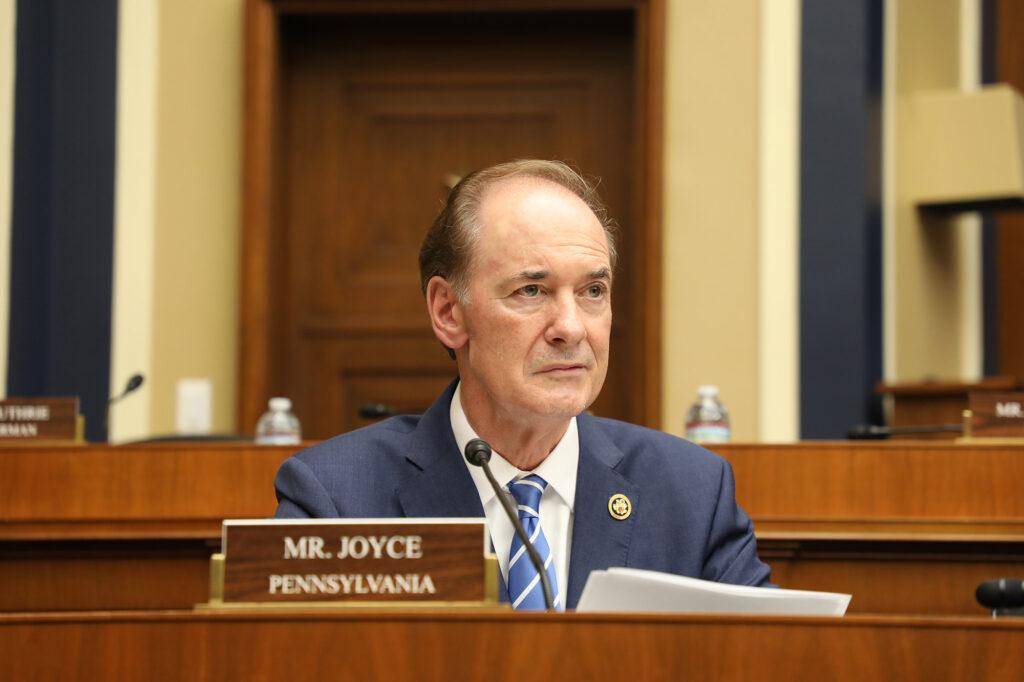
I particularly appreciate the way that you hold true to your values and your approach to limited government. In a time where there’s so much acrimony in Washington and fighting between different factions between Republicans or Democrats or otherwise, you’ve developed a real reputation for getting things done across the aisle. How do you approach those interactions on a day-to-day basis?
I think it comes from my background in medicine. I often served on boards where we had to bring together the orthopedic surgeons who want things done tomorrow, if not yesterday, with the pediatricians, who might be easier to understand and work together. There are definitely different factions here right now.
We’re celebrating the 250th anniversary of the United States, the semi quincentennial. Of those 56 who signed the Declaration of Independence, there were four doctors. We’ve always had a seat at the table. One signer is Benjamin Rush from Pennsylvania. I belong to a medical society that he founded, although I’m not old enough to know him. He realized that we don’t think outside of the box. We think from within the box of caring for individuals. I think it’s important that as someone who stepped into a political life, I maintain that ability to care for my constituents.
That transposes here to Washington when individuals say, ‘let’s sit down and talk about this.’ I spend 25 years of a career practicing medicine, sitting down and talking about diagnosis, implementation, plans, pros and cons. That’s what I think has allowed me to develop the ability to work across the aisle.
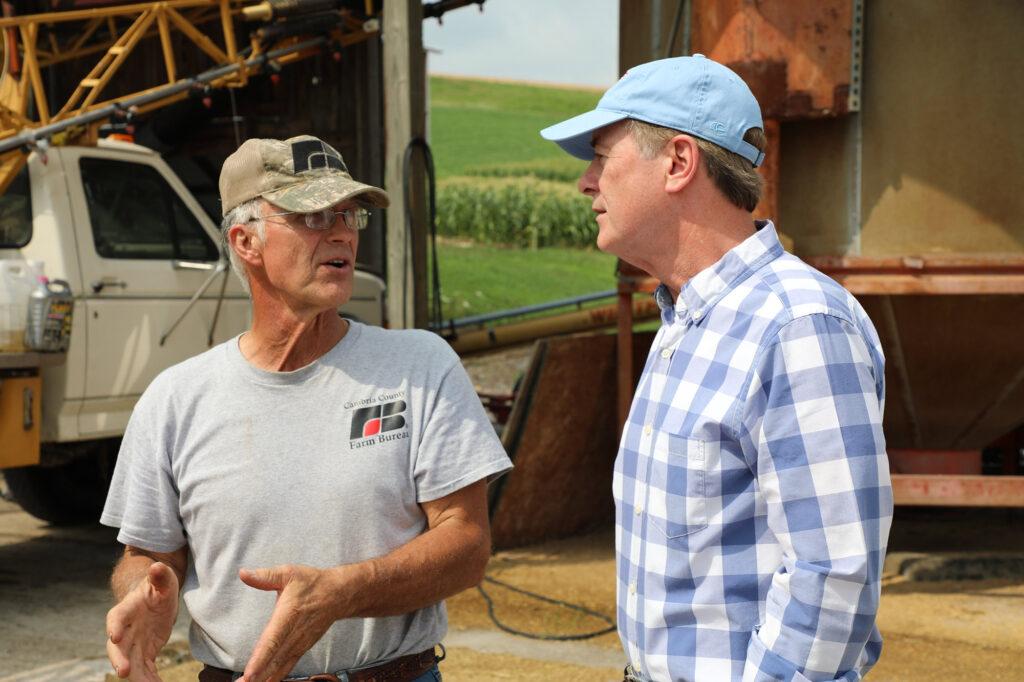
It certainly shows. Shifting back to broadband for a minute, let me ask you about your district. You have some suburban areas, some very remote areas. What do you hear from your constituents about the need for broadband? Why is it important?
I think constituents go to that first group I talked about. They need connectivity yesterday. They want it tomorrow. We have to be able to cut aside all those implements that are delaying it.
It’s agriculture who’s suffering the most right now. I’m going to use a very specific case of precision agriculture because I spent August visiting many of the farms in my district.
They have great pieces of equipment that cost millions of dollars. If one of the arms of the fertilizer becomes blocked or breaks and starts spewing fertilizer out, their equipment will tell them. It will ping their phone or show up on their iPad. That’s if they’re connected. This is part of their equipment but if they are not connected to it, they are losing money.
Agriculture and the farmers and the fruit growers in my district have made it quite clear. ‘We need connectivity. We need it throughout the rural areas that we serve. It is a cost-efficient way that we can be the farmers.’
We really appreciate you carrying that message to your colleagues on the committee and across Congress. We’re in September right now and we have an election coming up. What’s on your agenda? What do you want to accomplish in the next 2 years?
I want to pass a bipartisan piece of legislation that I’ve worked on with Representatives Greg Landsman (D-OH) and Scott Peters (D-CA), called the Broadband Rail Act. This allows broadband to extend over, under, or adjacent to the rail.
I am the grandson of rail workers. Rail was built throughout America to connect people. Guess who’s doing that today? Broadband is doing that today. My grandfathers would be proud of me advocating for the Broadband Rail Act, allowing that connectivity to occur. The rails are there. They’re built. They were given special acquisition to be able to do this. Right now, working with my colleagues to be able to have a bipartisan piece of legislation, to allow that connectivity to occur, allowing those exceptions to be made so that the broadband can be deployed. We realize those lines are important. I understand that from my family background. Right now, it is the next steps forward for connectivity, and that is the connectivity that occurs via broadband.
It’s really exciting. I’ve had at least six CEOs tell me, the one thing you need to fix is the railway. That’s the biggest holdup that really slows deployments down.
The last time you spoke to our board of directors, you got exposed to the chairman of my board, Patty Boyers. She is from Southeast Missouri. You had a fascinating interchange about ‘hills and hollers,’ if I’m not mistaken.
Patty Boyers is really a dynamo. There’s no question about that. She’s a strong advocate. I was talking about the geographic challenges in South Central Pennsylvania for the connections of broadband. She said, ‘we don’t talk about the mountains and the valleys. We talk about the hills and the hollers.’
And I said, ‘I think we’re talking about the same thing. We are just using different language.’
She knew that, of course. We do have hills and hollers. I’m from Penn State. We have Happy Valley. We have mountains and valleys. We understand that these are additional geographic challenges. When industry comes in facing that, still wanting to connect all of the constituents to the best of their abilities, we have to agree that allowances have to be made to connect those areas because of the geographic challenges.
When Patty educated me on the hills and hollers, I’ve quoted her probably 50 or 60 times to the farmers and to the industries throughout South Central Pennsylvania. They all get a chuckle out of it. I have a few of them saying hills and hollers now.
I appreciate you taking the time. Thank you, Congressman.
May I offer one final message to your members? First of all, your advocacy is so important. My team and I will reach out to you as we face these issues. This must be a bipartisan solution moving forward. You identify individuals that we can work with. And I hope you tell people on the other side, that I can work as well. I often say when I’m home, I don’t care if you’re an independent, a Democrat, or Republican. My job is to get you connected. That is what you do, and I thank you for it.