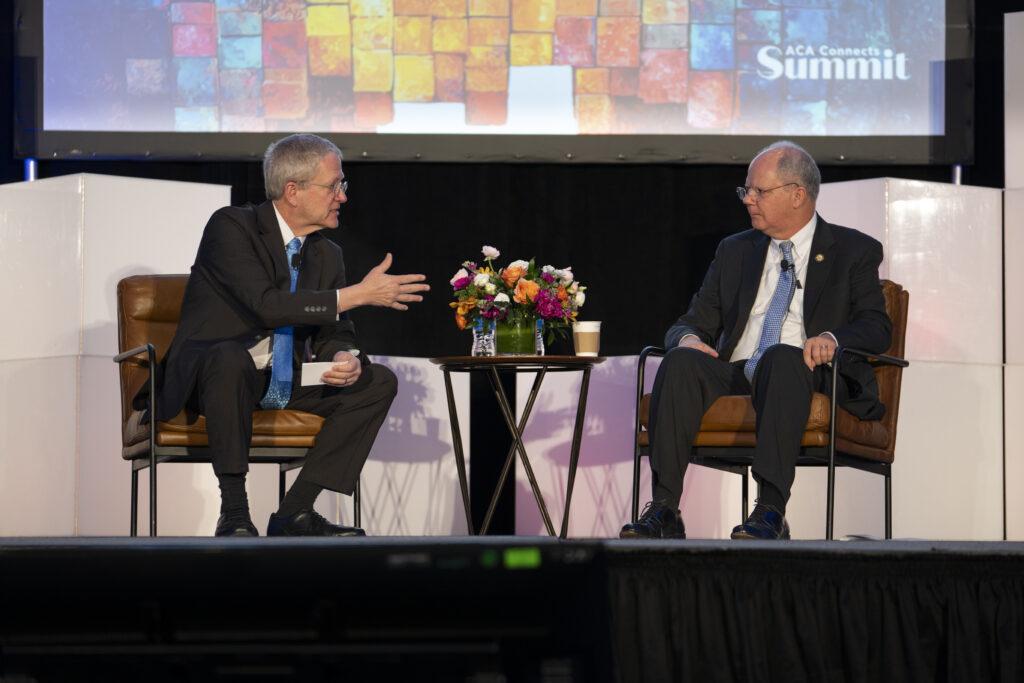
First, I want to extend my sincere thanks to all our members and partners of America’s Communications Association who attended Summit 2026 and made it a success. The week was dedicated to building relationships, strengthening connections, and fostering the community our members rely on to navigate an evolving regulatory landscape and advocate for a strong future for their businesses.
The Summit featured many news-making discussions, including with the chairman of the influential Energy and Commerce Committee, Brett Guthrie, a serious and solutions-driven lawmaker from Kentucky. He has served in the U.S. House of Representatives for more than 15 years and became Chairman of Energy and Commerce at the beginning of this Congress.
As part of my Capitol Connection series—ACA Connects’ exclusive interviews with key individuals who shape the landscape of communications policy—I’m publishing top moments from my conversation with the chairman on the Summit mainstage.
Chairman Guthrie provided a behind-the-scenes perspective on the innerworkings of the Committee, what drives Members of Congress to reach across the aisle, who they are listening to, and how ACA Connects members can make the biggest impact. He shared updates on the committee’s work to pass permitting reforms, rewrite the 1992 Cable Act, and the future of AI.
Before you dive into our Q&A, I want to spotlight one moment from the Chairman’s remarks—an important reflection on leadership that cuts through the 24‑hour news cycle’s focus on power struggles, gridlock, and partisanship.
As Chairman Guthrie put it:
“The way I try to be bipartisan is to ask, ‘how do we win?’ Not, ‘how do I make the other side lose?’ How do we win together. That is the attitude of the Energy and Commerce Committee. That is the attitude of my chairmanship.”
I hope you enjoy this Capitol Connection conversation as much as I enjoyed hosting Chairman Guthrie at the Summit—a reflection of our commitment to connect our members with the policymakers shaping the communications landscape.
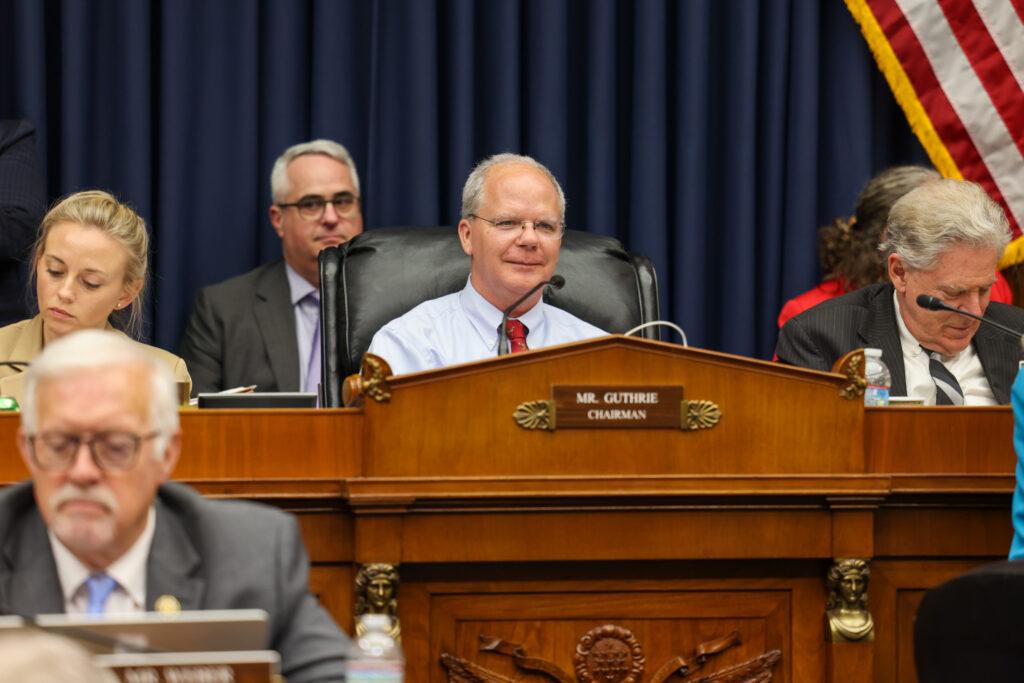
Q: The Energy and Commerce Committee has a remarkable legacy of bipartisan work on all the issues that are important to members of ACA Connects. Why do you think communications policy is particularly conducive to this?
Communications isn’t a polarizing issue like healthcare with a single payer system on one side and free market ideas on the other. It doesn’t have that polarizing dynamic. Mostly, people realize that the best deployment of communications is people making business decisions and deploying capital in the most efficient way. That lends itself to more bipartisan work.
On Energy and Commerce, we don’t avoid issues because, well, you may be a Republican or you may be a Democrat. We try to solve them together. The Universal Service Fund is a good example. We have our Communications and Technology Subcommittee Chair Richard Hudson, who’s head of our Republican campaign arm, working with Congresswoman Doris Matsui, who is just an incredibly serious Democratic legislator from the Sacramento area of California.
The question is ‘how do you make policy sustainable?’ You make it sustainable if both parties can do it together. That is what we try to do.
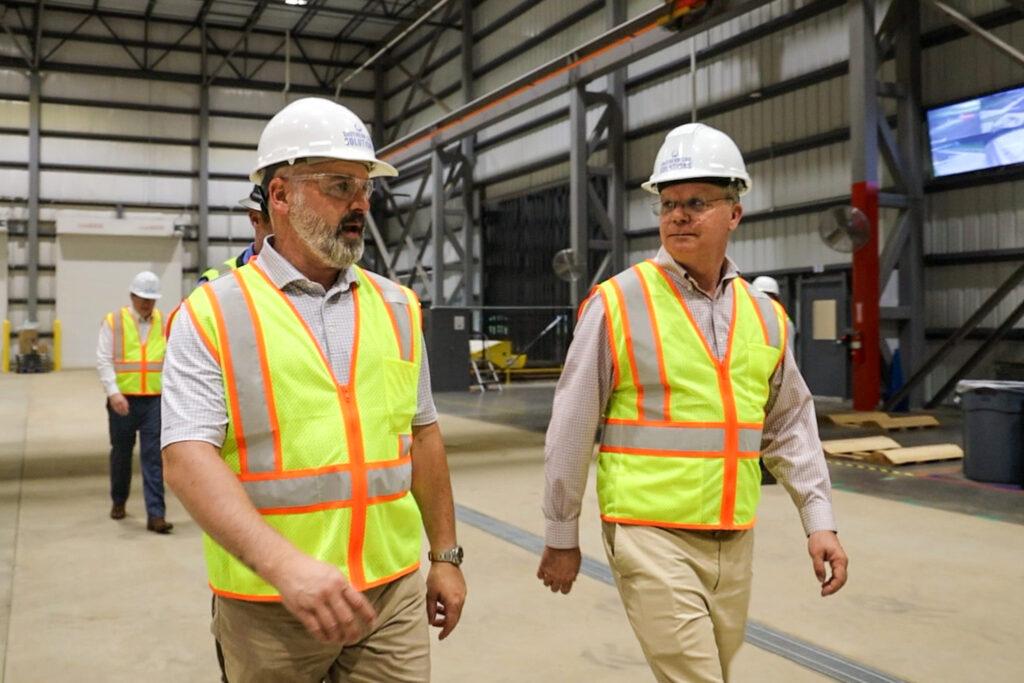
Q: You do it on a wide variety and vast number of issues. As a previous chairman would say, “If it moves, it’s energy. If it doesn’t, it’s commerce.” Can you break that down for us?
Most committees in Congress do what their title says. The Agriculture Committee does the Farm Bill. The Armed Services Committee does the National Defense Authorization Act every year. The Transportation Committee does the Transportation Authorization Act. On the Energy and Commerce Committee, we do oil, gas, and wind. That is energy and that makes sense. The Commerce side? I always tell people it is Hollywood, broadcast, streaming, cable, artificial intelligence, manufacturing, and most of all the health care policy.
Q: One of the first things you said after becoming the Chairman last year was calling on Congress to revisit the 1992 Cable Act. You are preaching to the choir here! There is nothing more broken than the 1992 Cable Act. You have had several hearings that have begun to touch on the need to holistically look at the Cable Act, the 1996 Telecommunications Act, the Universal Service Fund, and more. Can you tell us more about this overall reform effort and why it matters?
Your competitors have changed. You aren’t isolated in your communities anymore. You have competitors that have come online, including streaming services. It isn’t fair to be treated separately from those when they essentially provide the exact same product, and they’re not bound by some of the same rules that you guys are bound by in the Cable Act.
The big debate that we wanted to start is should we bring streaming under the same over-regulation of what you guys deal with? The opposite is should we let you guys compete in a fairer environment than trying to put the regime over streaming?
We’ve been receiving information from different groups on this effort. I wish that we were farther down the road than we are right now. As of this interview, we have 52 actual legislative days left. It will be difficult to say there’s going be a bill signed by the president this year. We do want to keep moving this down the road because it’s important to realize how much the environment has changed since 1992.

Q: At Summit 2026, we’re celebrating how our members are building and deploying broadband in their communities. However, there are still challenges to overcome. Projects are being held up. It’s usually in conjunction with getting access to rights away, either from the local government or from the utility. These complex permitting burdens are killing deployments funded by both the government and private investment. We’d love to see Congress focus on solving these permitting issues, especially with BEAD funds getting out the door. What will it take to get permitting reforms across the finish line?
We’ve passed some bills out of the Committee—some bipartisan, some not as bipartisan. We’re trying to bring everyone together for more bipartisan solutions because it’s more stable, and we also need 60 votes in the Senate. If it isn’t bipartisan, then the next administration can undo it. If it is just done by regulatory agencies like the FCC, then the next president can appoint people to undo it.
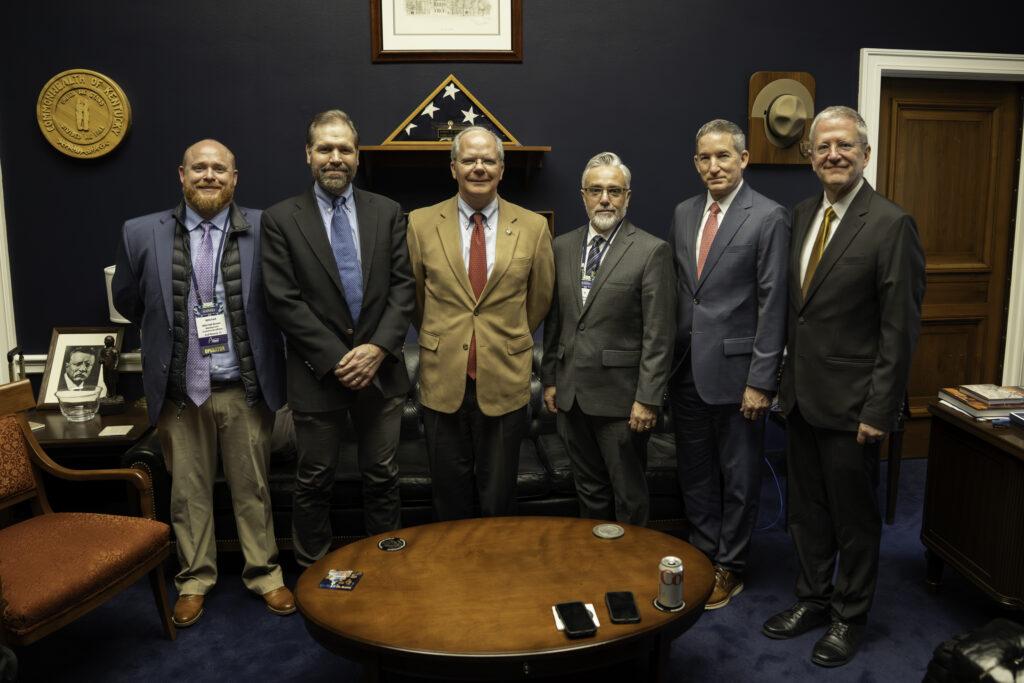
Q: Let’s talk for a second about the future of Artificial Intelligence. How does this touch many parts of the Committee’s work and what is the role of broadband providers?
The thing that ties all our Energy and Commerce jurisdiction together is AI. How are you going to access an AI if you don’t have access to broadband? You know, it’s not just AI from Google and Apple. It is AI for people to use, and for people to use it in their home, they need high-speed broadband. ACA Connects members are part of the whole package.
Q: This room is full of small business owners. Some ACA Connects members are tiny, some are small, and some are medium-sized. The evolution of the marketplace over the last 30 years has left them in a situation that is incredibly unfair, especially from a bargaining perspective. Why is it important for them to build relationships with their representatives in Congress?
It is critical to have your niche in your community. I always say it’s the people whose names are on the back of the little league uniforms. Those are the ones who have signs in the outfield. They are local. I’m going to tell you, members of Congress hear about the local need more than they hear from the bigger players. Somebody that is local that is supported in their district is important to a Member of Congress.
Not just for your industry, it is all industries that have people who have a niche to serve their community. People in your community want to do business with you, but the regulatory structure can make it too difficult to compete, or the big guys make it difficult for you to compete in a way that’s not beneficial to the market. That is what we are trying to figure out. Your input is absolutely important here.